
Key Takeaways
- IOP provides structured, multi-hour weekly therapy intended for people who need more support than weekly outpatient therapy but not 24/7 inpatient care.
- Typical IOPs run 4–12 weeks, with the group meeting several times each week..
- Insurance may cover IOP—confirm with your provider.
- Consider IOP if you have symptoms that are not improving and that interfere with your responsibilities or quality of life.
Choosing the right level of mental health support can feel overwhelming, especially when you’re deciding between standard outpatient therapy and a more structured intensive outpatient program (IOP). Both options provide valuable treatment, but they differ in intensity, frequency, and the level and type of accountability and support they offer.
An IOP offers a middle ground between traditional therapy and inpatient or residential treatment. It allows clients to maintain their daily routines—like work, school, or family life—while receiving multiple hours of therapy per week. IOP aims to reduce symptom severity and improve daily functioning through structured therapy and skills training. It helps clients to learn and mastery therapy skills at a faster pace because there are expanded opportunities for practice and support.
At Transitions Counseling, we often work with individuals who have already tried weekly therapy but need additional support to make meaningful progress.
What is the Difference Between IOP and Standard Outpatient Therapy?
Understanding the key differences between IOP treatment and standard outpatient therapy can help you make an informed decision about the best treatment for your needs.
While both offer therapeutic support, IOPs provide a more intensive, structured environment designed to help individuals who need more support than weekly therapy can offer. Below is a quick comparison to highlight the differences in terms of time commitment, frequency, treatment intensity, and more.
| Feature | Intensive Outpatient Program (IOP) | Standard Outpatient Therapy |
| Frequency | 2-3 sessions per week | Once a week or bi-weekly |
| Session Length | 2-3 hours per session | 45-60 minutes per session |
| Treatment Structure | Structured with a set schedule and focus | Flexible, client-driven scheduling, typically individual therapy |
| Therapeutic Modalities | Primarily group-based groups | Primarily individual therapy, may include occasional family therapy |
| Accountability | Daily/weekly check-ins, group support for accountability | Less frequent check-ins, self-directed between sessions |
| Level of Care | Moderate intensity; for clients who need more than weekly therapy | Low intensity; for clients managing mild to moderate symptoms |
| Crisis Management | Structured support for clients experiencing moderate crises | Primarily for managing ongoing symptoms, with limited crisis intervention |
| Cost | IOP is generally less expensive than inpatient hospitalization because it does not require overnight stays; exact costs depend on program length and services. | Typically lower cost than IOP, often covered by insurance with fewer out-of-pocket expenses |
Where IOP Fits in the Continuum of Care
IOP treatment is designed to provide a level of care that falls between standard outpatient therapy and inpatient treatment. Understanding where an IOP fits in the continuum of care can help you determine if it’s the right choice for your needs or if another level of care would be more appropriate.
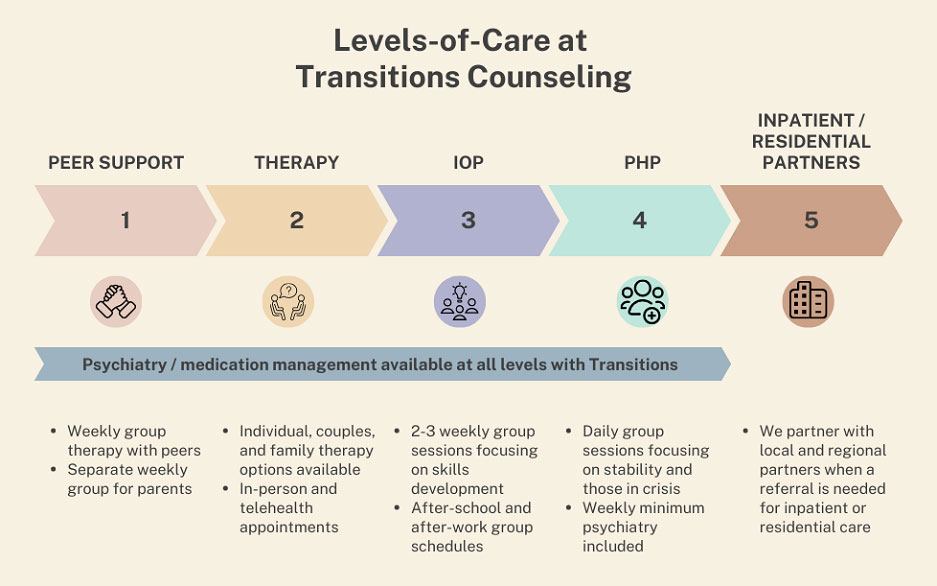
Step-Up from Weekly Therapy
For individuals whose mental health symptoms are not improving with weekly outpatient therapy, IOPs offers a more intensive approach to help with rapid symptom reduction. If you’re struggling to maintain progress, experiencing frequent setbacks, or dealing with worsening symptoms (such as heightened anxiety, depression, or suicidal thoughts), an IOP can provide the increased structure and frequency needed to help reduce symptom intensity and recurrence through structured interventions and achieve measurable clinical improvements (ex: symptom reduction, improved functioning).
The structured environment of IOPs help individuals focus more deeply on their treatment. With multiple sessions a week (typically 2-3), clients have more opportunities to learn coping skills, participate in therapeutic group discussions, and work through difficult emotions with the support of a team of professionals and peers.
Step-Down from Inpatient or Partial Hospitalization Programs (PHP)
For those coming out of inpatient treatment or a Partial Hospitalization Program (PHP), an IOP serves as a vital step-down option. It provides the necessary support as individuals transition back into daily life, helping to prevent symptom return and ensuring a smooth return to work, school, or family life.
IOPs allow individuals to continue receiving structured care without the restrictive level of supervision and hospitalization required by inpatient programs. This makes it an ideal option for maintaining treatment progress in a real-world setting while reducing the risk of returning to crisis-level symptoms.
Maintaining Flexibility in Daily Life
One of the major benefits of an IOP is that it allows clients to receive the treatment they need without the disruption of inpatient care. Clients in an IOP can continue to work, attend school, and maintain family responsibilities, all while receiving more intensive mental health support than what’s provided by weekly outpatient therapy. This flexibility makes it an appealing choice for individuals who need a higher level of care but still need to balance therapy with everyday life.
Who Should Consider IOP Treatment?
IOP is most beneficial for individuals who need more support than traditional weekly therapy but do not require the level of care provided by inpatient programs. It’s designed for people who need a structured, intensive treatment plan to address mental health challenges while maintaining their regular responsibilities. Below are some of the common scenarios where IOP can make a significant difference:
- Persistent or Severe Symptoms: IOPs are ideal for people whose mental health symptoms are persistent, moderate to severe, or have not improved despite attending standard outpatient therapy. If you have been struggling with issues like depression, anxiety, PTSD, or eating disorders, and weekly therapy has not been sufficient, IOP provides the added intensity and structure that can help you manage these symptoms.
- Those Experiencing Functional Impairment: When mental health symptoms begin interfering with your ability to work, attend school, or care for your family, IOP can offer the support necessary to regain functionality. If you’re missing work or school, finding it difficult to meet family obligations, or struggling to keep up with daily tasks due to mental health challenges, IOP provides an opportunity for more intensive care while still allowing you to stay engaged in your day-to-day life.
- People at Risk of Relapse or Crisis: For individuals who are at risk of relapse or have recently experienced a crisis, IOP can be a crucial step in maintaining stability. Whether recovering from substance use, an eating disorder, or a mental health crisis, IOP offers a safe and supportive environment that helps you maintain continuity of care and follow-up and avoid a full relapse or return to hospitalization.
- Individuals Who Benefit from Group Therapy: Group therapy is an essential component of IOP, providing individuals with the opportunity to connect with others facing similar challenges. This sense of community and shared experience can be often helpful for those who feel isolated by their struggles. The peer support and accountability provided in group settings help participants feel less alone and more motivated to stay engaged in their treatment.
- People Who Need More Support Than Weekly Therapy Offers: If you’ve already tried weekly therapy but haven’t made the progress you need, or if you find it difficult to maintain momentum between sessions, IOP provides the level of support to achieve measurable improvements in symptoms and functioning. The increased frequency of sessions and structured environment of IOP helps keep participants focused on their recovery, preventing them from slipping back into unhelpful patterns between appointments.
What Does Treatment Look Like in an IOP?
An IOP offers a highly structured and comprehensive approach to treatment. It involves multiple hours of therapy each week, delivered in a format that allows clients to maintain their daily lives while receiving intensive care. Below is an overview of what you can expect during an IOP, including the types of therapy, frequency, and typical program components:
Session Structure and Frequency
IOP typically involves 2-3 sessions per week of treatment, with sessions lasting between 2 to 3 hours each session. The exact schedule may vary depending on the program and the needs of the individual. The higher frequency of treatment ensures that participants receive more touchpoints for therapeutic support, which is vital for those needing additional assistance beyond weekly therapy.
Program Length
IOPs are typically short-term programs, lasting anywhere from 4 to 12 weeks. The goal is to provide intensive support during a time of crisis, moderate to severe symptoms, or significant distress, and then step down to a less intensive level of care, such as weekly therapy or other outpatient services. The length of the program can vary based on the individual’s progress and treatment needs.
Outcome-Based Care
IOP treatment is structured around outcomes-based care, meaning that progress is regularly measured and assessed using evidence-based tools. We use the Patient Health Questionnaire (PHQ-9) and the Generalized Anxiety Disorder Scale (GAD-7) to measure progress for depression and anxiety. Each week, therapists and clinical teams work closely with clients to track their goals and adjust treatment as needed using professional tools to guide the process. This ensures that the program is tailored to the individual’s evolving needs and that clients receive the right level of support during the process.
Will Insurance Cover IOP?
Understanding the cost and practical logistics of an Intensive Outpatient Program (IOP) is a key consideration for many individuals when deciding whether IOP is the right choice. This section outlines what to expect in terms of cost, insurance coverage, and the logistical aspects of participating in IOP.
Cost of IOP vs Other Levels of Care
While inpatient programs can be costly, IOPs offer a more cost-effective alternative for individuals who need more intensive treatment but can continue managing daily responsibilities. The cost of IOP can vary depending on the program’s location, frequency of sessions, and treatment components. However, IOP is generally less expensive than inpatient care because it doesn’t require overnight stays or 24-hour supervision.
For those who don’t need the round-the-clock care of inpatient programs, IOP provides a high level of support while still allowing individuals to maintain their daily lives, making it a viable option for those on a budget.
Insurance Coverage
Many health insurance plans cover medically necessary IOP services; coverage varies by plan so be sure to verify benefits with your insurer and the program. Many programs will accept private insurance as well as Medicare and Medicaid, but it’s always recommended to check with the specific provider to verify coverage details. It’s also essential to verify the benefits with your insurance provider to determine your out-of-pocket expenses, co-pays, and whether you need pre-authorization.
Some IOPs may also offer sliding scale fees or payment plans for individuals without insurance or for those who have high out-of-pocket costs. It’s worth inquiring about financial assistance options when considering treatment.
When Weekly Therapy Is Enough vs. When to Consider IOP
Determining whether standard weekly therapy or an Intensive Outpatient Program (IOP) is the best fit for you depends on your specific symptoms, treatment history, and current situation. Here’s a helpful checklist to guide your decision.
When weekly therapy may be enough:
- You are able to maintain your daily responsibilities (work, school, family) as usual
- You have mild to moderate symptoms of anxiety, depression, or stress
- You don’t experience frequent or severe emotional crises
- You feel that therapy sessions are helping, and you don’t need more support at this time
- You are coping well with life’s challenges and need a safe space for processing thoughts and emotions on a regular basis
When to consider IOP:
- You struggle with moderate to severe or persistent symptoms (ex: depression, anxiety, trauma, substance use concerns lasting several months or longer)
- You experience emotional crises or have trouble functioning at work, school, or home due to your symptoms
- You have tried weekly therapy but feel like you haven’t made significant progress
- You need extra support to manage triggers, cope with stress, or develop new skills to maintain progress
- You have co-occurring disorders (such as mental health and substance use) that require a more comprehensive treatment plan
- You would benefit from peer support and accountability, which IOP can provide through group therapy and community involvement
If you find that your symptoms are interfering with daily life or that you are not seeing progress with weekly therapy, IOP can provide the intensive support needed to manage these challenges more effectively.
What Happens After IOP?
The ultimate goal of any IOP is to help clients make meaningful progress and transition to a less intensive level of care. While IOP can provide significant benefits, it is not meant to be the final stage of treatment. Continuing care is crucial to maintaining progress and preventing symptom return long-term.
Transition to Weekly Therapy
After meeting treatment goals in IOP and symptoms stabilize, many individuals transition to weekly outpatient therapy for ongoing support. After completing an IOP, clients may have developed the skills and tools they need to manage their mental health but still benefit from regular check-ins with a therapist as they adjust to having less support each week. Therapy provides opportunities to continue addressing challenges, strengthen your ability to independently use coping skills, and maintain mental well-being.
Continued Progress & Long-Term Support
A key part of ongoing care after IOP is maintaining the progress made during treatment. Many programs help clients create a personalized wellness plan, which includes strategies for recognizing early signs of distress, strengthening coping skills, and sustaining healthy routines. This plan helps individuals stay grounded and confident as they transition back into daily life.
Clients are encouraged to remain actively engaged in their self-care practices and to use the skills developed during IOP when facing challenges. Many continue working with a therapist, participating in mindfulness or support groups, or engaging in activities that promote emotional balance and connection.
Final Thoughts
Choosing an appropriate level of mental health care can be challenging. While standard outpatient therapy works well for many, an Intensive Outpatient Program (IOP) offers additional support for those struggling with more persistent or severe symptoms. IOP provides a structured, supportive environment with a focus on skill-building, group therapy, and more frequent sessions, making it an ideal choice for individuals who need more than weekly therapy but don’t require inpatient care.
At Transitions Counseling, we offer a variety of IOP options, including adult, teen, and virtual programs, designed to help you manage your mental health challenges while maintaining your daily life. If you’re unsure whether IOP is the right fit for you or a loved one, our team is here to guide you through the process. Book an appointment today to learn more about how we can support your journey to better mental health.