
Intensive outpatient program (IOP): accredited mental health treatment in Arizona & Texas
You don’t have to keep managing everything on your own. When anxiety, depression, trauma, or emotional overwhelm start to interfere with daily life, our licensed therapists can help.





What is an intensive outpatient program (IOP)?
An intensive outpatient program is a structured level of mental health care for individuals who need more support than traditional weekly therapy, but do not require inpatient treatment.
It’s often recommended when symptoms begin to interfere with daily life and more consistent support is needed to regain stability.
Transitions Counseling and Consulting offers intensive outpatient programs (IOPs) for adults and teens across Arizona and Texas, including virtual IOP for adults and teens who need more flexibility. This level of care provides structured, consistent treatment while allowing you to stay connected to home, work, or school.
Our IOPs include frequent therapy sessions focused on building skills you can use in everyday life. Care typically includes:
Group therapy
- Evidence-based approaches such as CBT and DBT
- Mental health skills training and coping strategies
- Access to psychiatry when needed
- Ongoing assessment and care adjustments
IOP can help you feel more emotionally stable, reduce overwhelming symptoms, and better manage daily responsibilities.
This program is a treatment option for those recently hospitalized for mental health care, or when weekly therapy isn’t managing current symptoms or hasn’t produced long-term improvement.
Who benefits from IOP?
An intensive outpatient program (IOP) is best for individuals who need more consistent support than weekly therapy but still want to remain connected to their daily lives.
Many people come to IOP when they feel overwhelmed, stuck, or as things become harder to manage on their own.
IOP may help if you’re experiencing one or more of the following:
- Depression or ongoing sadness
- Anxiety or panic attacks
- Trauma or PTSD symptoms
- ADHD with emotional regulation challenges
- Self-harm thoughts or behaviors
- Difficulty managing stress or emotions
- Struggles in relationships or daily functioning
IOP can be helpful for teens and adults who feel like they need more structure and support to get back to a steadier place.
We provide evidence-based mental health care across Arizona and Texas, including virtual options when appropriate.
IOP for adults
Adult IOP focuses on helping individuals regain stability while continuing to manage work, school, and family responsibilities.
Treatment is centered on helping you:
- Manage stress and emotional overwhelm
- Improve communication and relationships
- Build coping strategies that work in real life
- Reduce symptoms of anxiety and depression
- Strengthen daily functioning and routines
- Respond more intentionally in difficult moments
Many adults come to IOP after noticing that weekly therapy is no longer enough during a difficult period in their life. This level of care may follow a major transition such as loss, divorce, burnout, or prolonged stress.
IOP for teens
Teen IOP supports adolescents between ages 12 and 18 who are experiencing emotional or behavioral challenges that are affecting school, friendships, or family life.
Treatment includes:
· Emotional regulation skills
· Communication skills
· Coping strategies for stress and anxiety
· Support for school attendance and performance
· Family involvement in treatment
· Safety planning when needed
Parents play an important role in teen care. We provide regular updates and family support sessions to help reinforce progress at home.
Our goal is to help teens feel more supported, emotionally stable and better equipped to manage daily challenges.
What to expect: a typical IOP weekly schedule
A typical IOP day is structured but designed to fit into real life. Sessions are typically held after school or work hours and led by an interdisciplinary clinical team.
You’ll participate in brief check-ins, learn and practice evidence-based coping skills in supportive groups, and receive educational information tailored to your needs.
Weekly IOPs include a mix of therapy and skill-building that’s structured enough to provide stability but flexible enough to maintain your daily routine.
Most clients attend:
- 2 to 3 days per week
- 2 to 3 hours per session
Treatment often includes:
- Group therapy sessions
- Skills training based on DBT and CBT
- Psychoeducation about mental health
- Optional family sessions
- Goal setting and progress tracking
Group therapy is a key part of treatment. It helps reduce isolation and creates connection with others who are facing similar challenges.
Over time, many clients notice they’re better able to manage stress, communicate more effectively, and regulate emotions.
IOP vs. PHP—Which level of care is right for you?
Intensive outpatient programs (IOPs) and partial hospitalization programs (PHP) both offer structured mental health treatment. The right choice depends on how much support you need right now.
IOP is also a step down from PHP. It offers strong support while allowing more flexibility in your daily schedule. PHP provides a higher level of care with more treatment time each week.
If you are unsure which program is right for you, our team will guide you through a clinical assessment and help you choose the best fit.
|
Level of care |
IOP |
PHP |
|
Days per week |
2 to 3 days |
5 days |
|
Hours per day |
2 to 3 hours |
5 to 6 hours |
|
Structure level |
Moderate structure |
High structure |
|
Best for |
Ongoing symptoms that affect daily life |
More severe symptoms or recent crisis |
|
Living situation |
Live at home |
Live at home |
|
Therapy format |
Group therapy with individual support |
Structured day treatment with clinical support |
|
Insurance coverage |
Often covered by insurance |
Often covered by insurance |
IOP is often the right choice if you need more support than weekly therapy but still want flexibility for work, school, or family life.
PHP may be a better fit if symptoms continue to feel overwhelming or if you recently left hospital care.
If your needs change, you can move between levels of care without starting over. Our team will help you transition smoothly.
Insurance, cost & how to get started
We understand that cost is a major concern when looking for mental health treatment. That’s why we work with most major insurance providers.
We verify your IOP treatment benefits before you begin so you understand coverage, deductibles, and expected out-of-pocket costs.
Getting started is simple:
1. You contact our team by phone or via the online scheduling portal
2. We verify insurance and schedule your intake
3. You complete a clinical assessment with a caring provider from our team
4. You begin treatment, often within a few days
We make the process easy so you can focus on getting support. In fact, many of our clients are surprised by how quickly they can begin care once they reach out.
What makes the Transitions Counseling and Consulting IOP different?
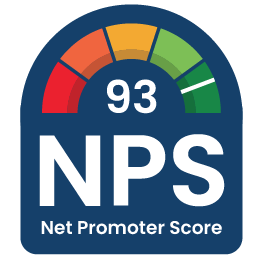
Our program is designed to help you make real progress, not just attend sessions. With a Net Promoter Score (NPS) of 93 and Joint Commission accreditation, our care is built around quality, consistency and results. NPS is a measure of how likely patients are to recommend care at Transitions Counseling and Consulting to a friend or family member.
The average healthcare provider scores around 38. Our score of 93 indicates that nearly every patient who walks through our doors would send someone they love here too.
Joint Commission Accreditation
We offer Joint Commission-accredited mental health care that meets national standards for safety, quality, and clinical excellence. Our programs are built to deliver consistent, high-quality treatment you can trust.
Evidence-based modalities: DBT, CBT and EMDR
Our IOP uses trusted, research-backed methods, including:
These approaches help with emotional regulation, trauma processing, and changes in thought patterns.
Continuity of care
One of the biggest benefits of treatment with our team is continuity. You stay connected to the consistent care team you trust, even if your needs for care change over time.
This means you do not have to start over if you move from IOP to PHP or to outpatient therapy. Your care stays connected and coordinated in the same place, with the same team.
IOP locations in Arizona & Texas
We provide intensive outpatient program (IOP) services across multiple locations, so care is accessible and close to home. If you are searching for an intensive outpatient program near you, our team can help you find the location in Arizona or Texas that fits your schedule and needs. We offer both in-person and virtual IOP options depending on your location.
Arizona locations include:
- Anthem
- Central Tucson
- Gilbert
- Glendale
- Goodyear
- Mesa
- Midtown Phoenix
- Phoenix
- Scottsdale
- Phoenix-Ahwatukee
- Tucson Oro Valley
Texas locations include:
We also offer telehealth mental health services across Texas and Arizona for eligible clients.
Personal Growth and Resilience
Whether it’s for teens or adults, an intensive outpatient program offers a range of advantages.
Participants receive specialized therapy, group support, and psychoeducation tailored to their specific needs, helping them develop coping skills, emotional regulation techniques, and healthier relationships.
The structured environment and supportive community foster personal growth, resilience, and a sense of belonging. By providing an inclusive and convenient treatment option, IOPs empower individuals and offer hope for lasting recovery.

Intensive Outpatient Program Reference Guide
- Schedule: 2-3 Sessions Per Week
- Time: 2-3 Hours Per Session
- Ideal Group: Preteens, teens, and adults with persistent mental health symptoms
- Step-Up Care From: Individual counseling
- Step-Down Care From: PHP, inpatient hospitalization, or residential care
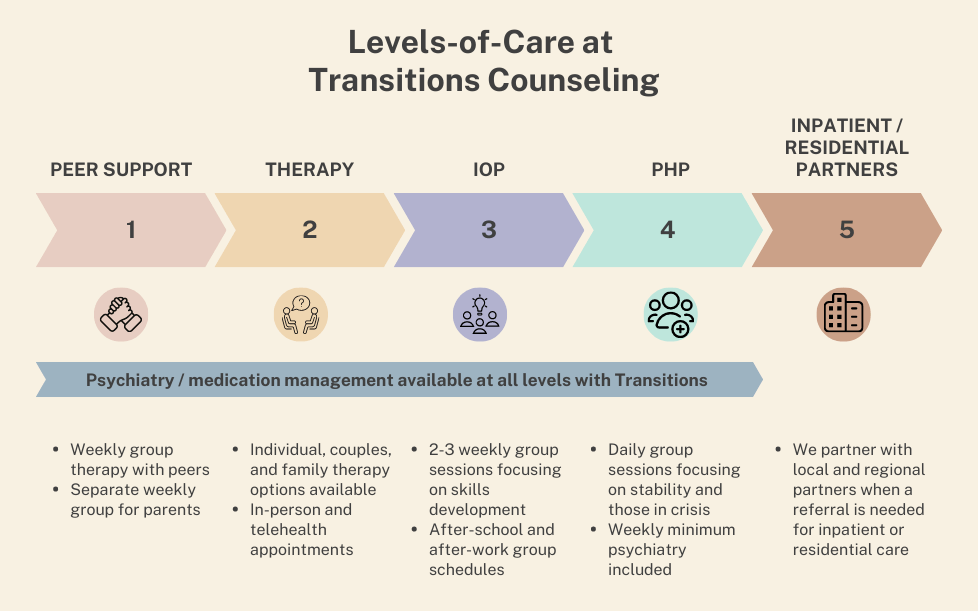
Mental Health Levels-of-Care at Transitions Counseling
Therapy involves regular sessions with a mental health professional to address emotional and psychological concerns, typically on an outpatient basis. An intensive outpatient program (IOP) offers a higher level of care with more frequent and intensive therapy sessions, often in a group setting, while
still allowing individuals to live at home. Partial hospitalization programs (PHPs) provide a more structured level of care than IOPs, involving full-day treatment and psychiatry support, while inpatient hospitalization or residential care offers 24-hour supervision and care within a hospital or residential facility for individuals with acute mental health needs.
Transitions Counseling offers multiple levels-of-care in one place, allowing you to receive comprehensive treatment, therapy, psychiatric support, and specialized programs tailored to your unique needs, fostering continuity, convenience, and holistic well-being.
IOP Treatment Typically Features
- Dialectical behavior therapy (DBT)
- Group therapy sessions
- Family therapy and involvement
- Access to parent support group
- Evidence-based assessments to guide treatment
- Referral access to in-house, experienced psychiatry providers
- Easily transition to other levels of supportive care as your needs change
Frequently asked questions
An intensive outpatient program is a structured mental health treatment option that provides therapy several days per week. It helps people manage symptoms while living at home. It is more intensive than weekly therapy but less intensive than inpatient care.
The cost of IOP depends on your insurance coverage and plan details. Many insurance providers cover most of your treatment with Transitions Counseling and Consulting. We verify your benefits before you start, so you understand your expected costs clearly.
Yes, most major insurance plans cover Intensive Outpatient Programs. Coverage varies by plan. We check your benefits ahead of time so you know what is included and what your out-of-pocket costs may be.
IOP usually meets 2 to 3 days per week. Each session lasts about 2 to 3 hours. The exact schedule depends on your personalized treatment plan and clinical needs.
Most IOP programs last eight to 12 weeks. Some people stay longer depending on progress and clinical recommendations. Your care team will help adjust your plan as needed.
IOP is less intensive than a partial hospitalization program. IOP requires fewer hours per week and offers more flexibility, while PHP provides a higher level of structured care and psychiatry services for individuals with more severe mental health needs.
Start your IOP journey today
Whether you’re struggling with anxiety, depression, stress, or something you’re still trying to understand, taking the first step toward care matters. Structured support can make a real difference.
Transitions Counseling and Consulting offers accredited intensive outpatient programs to help you feel more stable, supported and capable in daily life.
If you are ready to take the next step, our team is here to help.